The Golden Age to the Swinging Sixties: 1950–1970
3 min reading time

3 min reading time
The period between 1950 and 1970 marked a transformative era for both J.F. Sykes and J.W. Pickavant, one defined by innovation, expansion, and ultimately, unity.
By the early 1950s, Britain, and its motor trade, was firmly back on its feet following the challenges of the Second World War. This resurgence created the perfect environment for growth and innovation.
In 1952, J.W. Pickavant published a new catalogue, reflecting an expanding and increasingly sophisticated product range. Operations were now based at the Apkoway Works in Bow Street, Birmingham, a hub of engineering development.
During this decade, the company’s puller range grew significantly, introducing hydraulic pullers that would later evolve into the renowned “1500 Series.” Alongside these were general-purpose valve spring compressors and brake pipe flaring tools, as well as more specialised solutions such as timing gear extractors for Morris and Wolseley vehicles.
Innovation extended beyond mechanical tools. The introduction of the Apkoway tester for Borg Warner automatic gearboxes marked an early step into diagnostic equipment an area that would become increasingly important in the years ahead.


The momentum continued into the 1960s, a decade of economic growth and cultural change across the UK. Both Sykes and Pickavant embraced this “swinging” era with energy and ambition.
In 1960, J.W. Pickavant launched its first-ever customer newsletter, written by Midlands Technical Representative Jack Webster. Initially unnamed, readers were invited to suggest a title. Inspired by the rapid expansion of the UK’s motorway network, beginning with the Preston bypass (part of the M6), the publication was soon named Motorway.
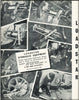
The newsletter became an important communication tool, sharing updates, innovations, and key developments. One notable announcement was the appointment of Walter Douglas, who focused on the industrial sector and the powerful Loadstar range of hydraulic pullers. With capacities of up to 100 tons and driven by separate hydraulic rams, these tools were used by major organisations, including power generation companies and the Ministry of Defence.
Product development continued at pace. New testing equipment was introduced, and both companies released updated catalogues, J.W. Pickavant in 1963, followed by J.F. Sykes.
Meanwhile, J.F. Sykes invested in its future with the construction of a purpose-built facility at Kilnhouse Lane in 1964. This site combined offices, assembly operations, and warehousing, reflecting the company’s growing scale and ambition.
As the decade progressed, both companies expanded their presence, attending motor shows, industry events, and showcasing their ranges through demonstration vans. However, it became increasingly clear that their product offerings were beginning to overlap.


With overlapping product lines, expanding operations, and a shared history of friendly rivalry, discussions began around a potential merger.
Fittingly, early conversations took place near the newly built M6, that had inspired the Motorway newsletter.
By 1968, the merger was complete.
Sykes-Pickavant was born.
Staff and management from both companies came together for a conference in the Lake District, marking the beginning of a new chapter. Soon after, the first combined catalogue was launched, bringing together the strengths, expertise, and heritage of both organisations.
